

A personal operating model is a tailored framework that harmonizes your ambitions with your daily routines. It is a strategic blend of habits, principles, and routines that reflect your values, goals, and aspirations. OptiModel provides this guide to help you design a life that meets and exceeds your expectations. This ultimate guide covers the core components of a personal operating model, including decision-making frameworks, priority management, and daily execution alignment.
Decision Making Framework
Decision making is the engine of your personal operating model. Without a clear framework, decisions become reactive and scattered. A decision making framework is a structured process for evaluating options and choosing actions that align with your core values. It reduces cognitive load and ensures consistency in your choices.
The Role of Values in Decisions
Your values act as the filter for every decision. When you know what matters most to you, you can quickly eliminate options that do not fit. This clarity prevents decision fatigue and keeps you focused on what truly matters. OptiModel emphasizes that success is intentional, not accidental, and this starts with value-based decision making.
Practical Steps for Better Decisions
To build a robust decision making framework, start by identifying your top three to five core values. Next, create a simple checklist that you can use when facing significant choices. This checklist should ask whether the decision aligns with your values, supports your long-term goals, and respects your energy and time. By using this checklist, you transform decision making from a stressful event into a routine practice.
Priorities and Roles
Priorities and roles define the structure of your life. A personal operating model is not just about what you do, but who you are in different contexts. Understanding your roles helps you allocate your time and energy effectively. It ensures that you are not just busy, but productive in the areas that matter most.
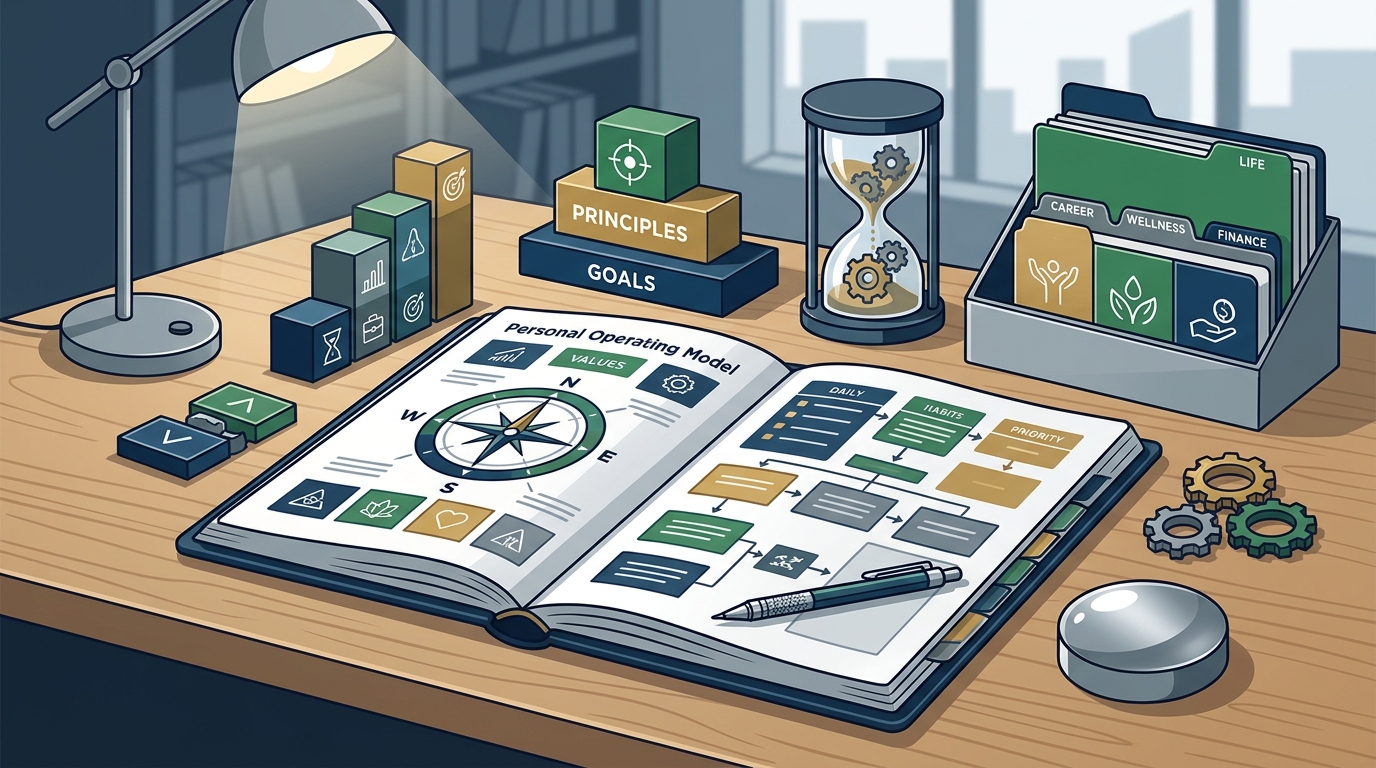
Identifying Your Key Roles
Most people wear multiple hats: parent, partner, employee, friend, and community member. Each role has its own set of expectations and demands. By explicitly identifying these roles, you can see where your time is going and where it should be going. This awareness is the first step in managing your priorities.
Setting Clear Priorities
Once you know your roles, you must set clear priorities for each. This means deciding what is most important in each area of your life. For example, if your role as a parent is a top priority, you must protect time for family. If your role as a leader is critical, you must focus on strategic goals. Setting clear priorities helps you say no to things that do not align with your top goals.
Daily Execution Alignment
Building Effective Routines
Routines are the building blocks of daily execution. They are the habits that you perform consistently, day after day. By designing routines that support your priorities, you create a system that works for you. This system reduces the need for willpower and makes progress automatic. OptiModel guides you in creating routines that are sustainable and aligned with your values.
Tracking and Adjusting
Tracking your progress is essential for daily execution alignment. It allows you to see what is working and what is not. By regularly reviewing your habits and routines, you can make adjustments as needed. This continuous improvement process ensures that your personal operating model evolves with you. It keeps you on track and moving toward your goals.
Key Takeaways
- A personal operating model is a tailored framework that harmonizes your ambitions with your daily routines.
- A decision making framework is a structured process for evaluating options and choosing actions that align with your core values.
- Priorities and roles define the structure of your life and help you allocate your time and energy effectively.
- Daily execution alignment is the bridge between your high-level strategy and your daily actions.
- Building effective routines reduces the need for willpower and makes progress automatic.
- Tracking and adjusting your progress ensures that your personal operating model evolves with you.
- OptiModel provides practical tools and frameworks to help you design and implement your personal operating model.
Frequently Asked Questions
What is a personal operating model?
A personal operating model is a tailored framework that harmonizes your ambitions with your daily routines. It is a strategic blend of habits, principles, and routines that reflect your values, goals, and aspirations.
How do I start building my personal operating model?
Start by identifying your core values and key roles. Next, set clear priorities for each role. Finally, design routines and habits that support your priorities. OptiModel offers guides and frameworks to help you through this process.
What is a decision making framework?
A decision making framework is a structured process for evaluating options and choosing actions that align with your core values. It reduces cognitive load and ensures consistency in your choices.
Why are priorities and roles important?
Priorities and roles define the structure of your life. They help you allocate your time and energy effectively, ensuring that you are productive in the areas that matter most.
What is daily execution alignment?
Daily execution alignment is the practice of ensuring that your daily habits and routines support your long-term goals. It is the bridge between your high-level strategy and your daily actions.
How can I track my progress?
Track your progress by regularly reviewing your habits and routines. This allows you to see what is working and what is not, and make adjustments as needed. Continuous improvement is key to a successful personal operating model.
Where can I find more resources on personal operating models?
OptiModel offers a variety of resources, including books, guides, and frameworks, to help you design and implement your personal operating model. Visit the Knowledge Hub to explore these resources.
Conclusion
Building a personal operating model is a journey of self-discovery and intentional design. By understanding your values, roles, and priorities, you can create a system that supports your goals and enhances your life. OptiModel is committed to helping you navigate this journey with clarity and confidence. Explore our Advisory Services to get personalized guidance on building your personal operating model. Take the first step today and start designing a life that is aligned with your true self.