

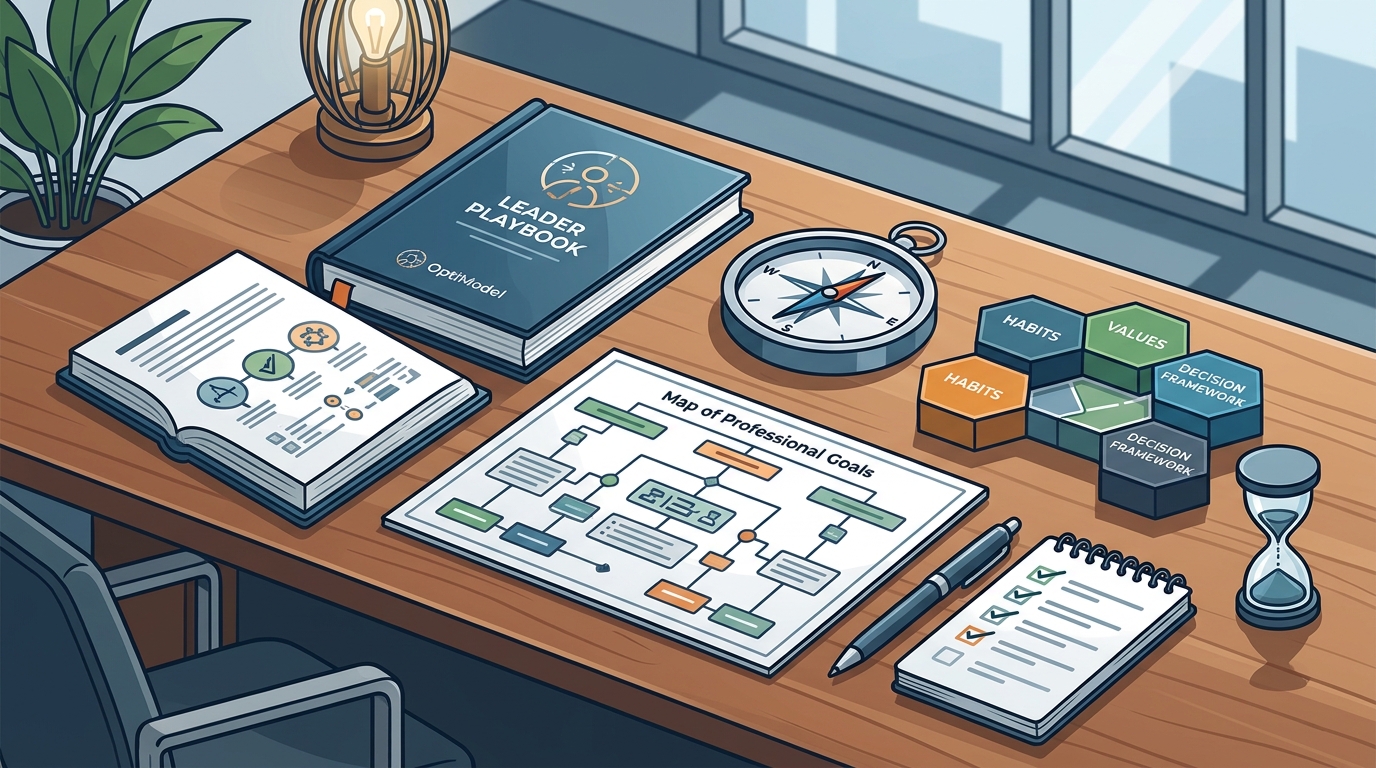
Executives often rely on intuition, but sustainable success requires a structured system. A personal operating model is a tailored framework that aligns your values, habits, and decision-making processes with your professional goals. OptiModel provides the strategic intelligence and practical tools necessary to design this system for clarity and consistent execution.
1. Core Values and Purpose
Define the non-negotiable principles that guide every decision. Values are the ethical compass that ensures your actions align with your long-term vision. When you lead with purpose, you build trust and consistency in your team. This foundation prevents drift during periods of high pressure or rapid change.
2. Decision-Making Frameworks
Establish clear criteria for evaluating options and resolving ambiguity. A decision-making framework is a structured method for analyzing data, weighing risks, and selecting the best path forward. Executives who use explicit frameworks reduce cognitive bias and accelerate execution. This component ensures that choices are made based on logic and strategy rather than emotion or urgency.
3. Strategic Alignment Mechanisms
Create a visible line of sight between daily tasks and organizational goals. Strategic alignment is the process of connecting individual contributions to the broader company mission. Without this mechanism, teams often work in silos, leading to duplicated effort and misdirected energy. Tools like the Strategic Alignment Map help leaders cascade priorities effectively across all levels of the organization.
4. Culture and Team Design
Intentionally build the environment in which your team operates. Culture is the operating system of an organization, determining how people behave when no one is watching. Leaders must design teams with clear roles, shared norms, and explicit communication protocols. Using a Team Design Canvas allows you to transform a group of individuals into a cohesive, high-performing unit.
5. Performance Measurement Systems
Track outcomes using metrics that reflect true business health. A performance measurement system is a set of indicators used to evaluate progress against defined objectives. Relying solely on financial data provides a rearview mirror perspective. A balanced approach, such as the Balanced Scorecard, captures customer satisfaction, internal processes, and learning capabilities alongside financial results.
6. Resilience and Adaptability Protocols
Develop habits that maintain stability during disruption. Resilience is the capacity to recover quickly from difficulties and adapt to new circumstances. Executives need protocols for managing stress, preventing burnout, and maintaining focus in chaotic environments. These protocols ensure that your personal energy levels support your strategic responsibilities over the long term.
7. Continuous Learning and Feedback Loops
Integrate regular reflection and external input into your routine. A feedback loop is a mechanism for gathering information on performance and adjusting behavior accordingly. Executives who actively seek feedback and engage in daily reviews identify blind spots faster. This component ensures that your operating model evolves as your role and the market change.
Choosing the Right Focus
When building your personal operating model, prioritize the component that currently creates the most friction in your leadership. If your team lacks direction, start with strategic alignment. If you feel overwhelmed, focus on resilience protocols. OptiModel offers frameworks and advisory services to help you identify and strengthen these specific areas.
Frequently Asked Questions
What is a personal operating model?
A personal operating model is a customized system of habits, values, and frameworks that guides how an individual thinks, decides, and leads.
How does a personal operating model differ from a business strategy?
A business strategy defines organizational goals, while a personal operating model defines the individual leader's internal systems for executing those goals effectively.
Can a personal operating model be changed?
Yes, a personal operating model is a dynamic framework that should evolve as your role, values, and external environment change.
What tools help executives build a personal operating model?
Executives can use frameworks like the 90 Day Leader Playbook, Balanced Scorecard, and Team Design Canvas to structure their leadership approach.
How often should an executive review their operating model?
Executives should review their operating model regularly, using daily reviews for immediate adjustments and quarterly or annual assessments for deeper structural changes.
Start Building Your Model
Clarity is the foundation of effective leadership. To design a personal operating model that supports your specific goals, explore the Knowledge Hub or book a Clarity Worksession with OptiModel.